AutoZone Vehicle Fitment
I led the redesign of the vehicle fitment experience following the integration of new ACES (Aftermarket Catalog Exchange Standard) data. The initiative focused on more flexibility when setting a vehcile, reducing unnecessary customer input, and ensuring that additional vehicle details were requested only when needed for accurate part selection.
Through iterative customer research and testing with real fitment data, we refined the experience to improve clarity, usability, and confidence in search results. The updated system also expanded fitment coverage beyond traditional passenger vehicles to include motorcycles and recreational vehicles, creating a more scalable experience for a broader range of customers and products.
Reimagining Vehicle Fitment Search with ACES Data
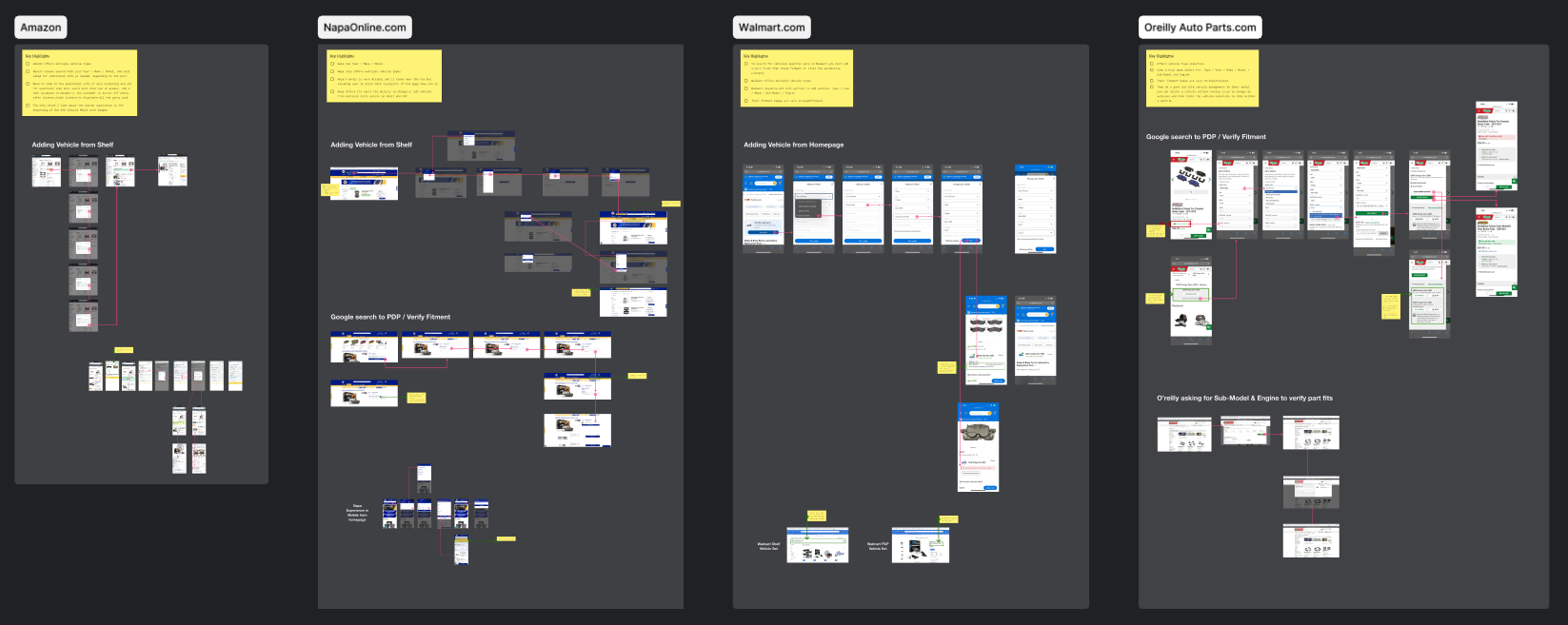
We mapped the different user journeys based on customer intent and product needs, informed by a review of competitor experiences and best-in-class industry practices. This ensured the experience remained consistent across all relevant touchpoints on both the website and mobile app, while helping us identify opportunities to streamline fitment discovery, reduce unnecessary steps, and create a more cohesive experience across platforms.
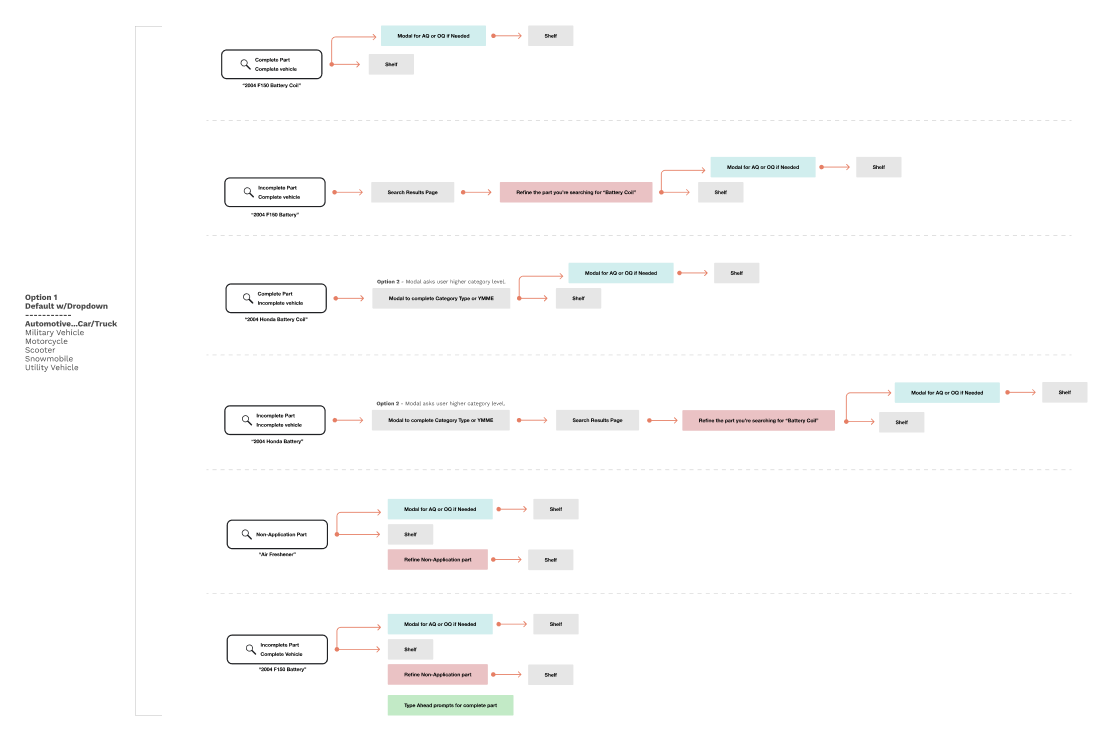
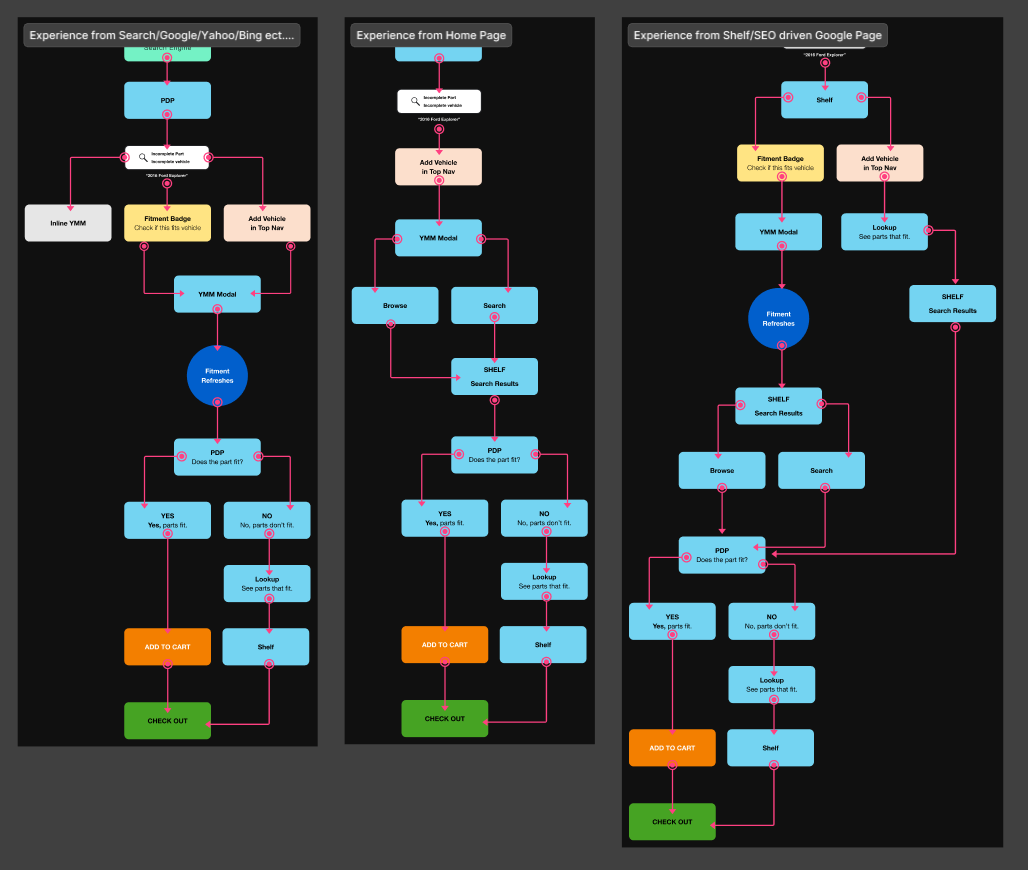
We conducted multiple rounds of research and usability testing to validate the redesigned fitment experience and identify areas of confusion or friction. Using realistic vehicle and product scenarios, we evaluated how customers navigated YMME selection, interpreted fitment information, and responded to different levels of required input. Findings from each round informed iterative updates to the flows, language, and interaction patterns, helping us balance a simpler customer experience with the accuracy and technical requirements of ACES data. This test-and-refine process continued across web and mobile experiences to ensure the final solution was clear, scalable, and consistent.
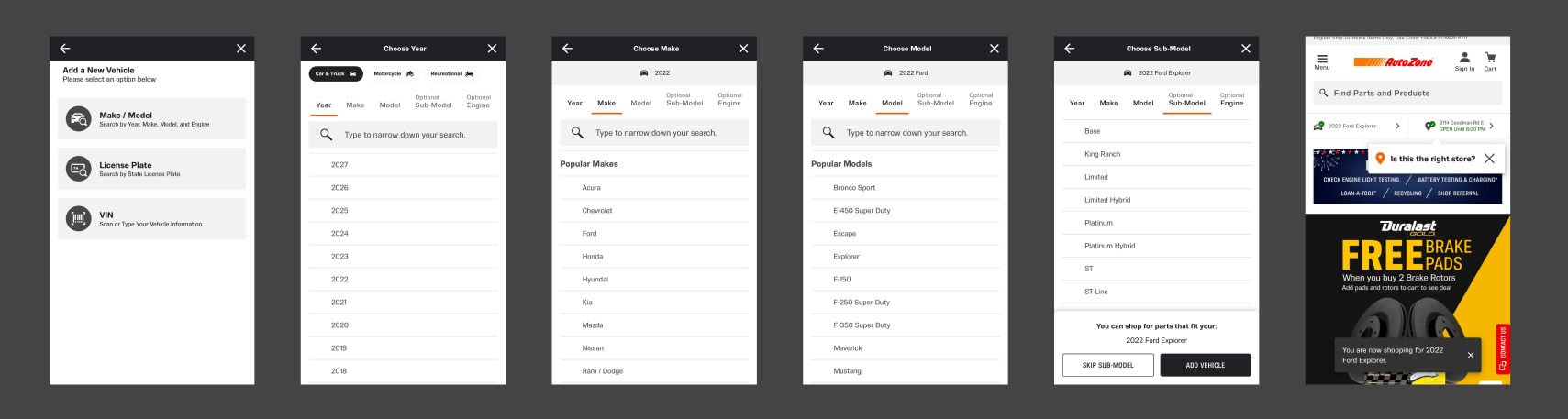
Next, we designed dedicated flows for AutoZoners assisting customers in stores. Because these experiences were being converted to touchscreen interfaces, we optimized the screens for quick, intuitive interaction and considered the natural conversations between store associates and customers. This helped ensure the flows supported real-world service interactions, enabling AutoZoners to efficiently gather vehicle and product information while guiding customers toward accurate fitment results.
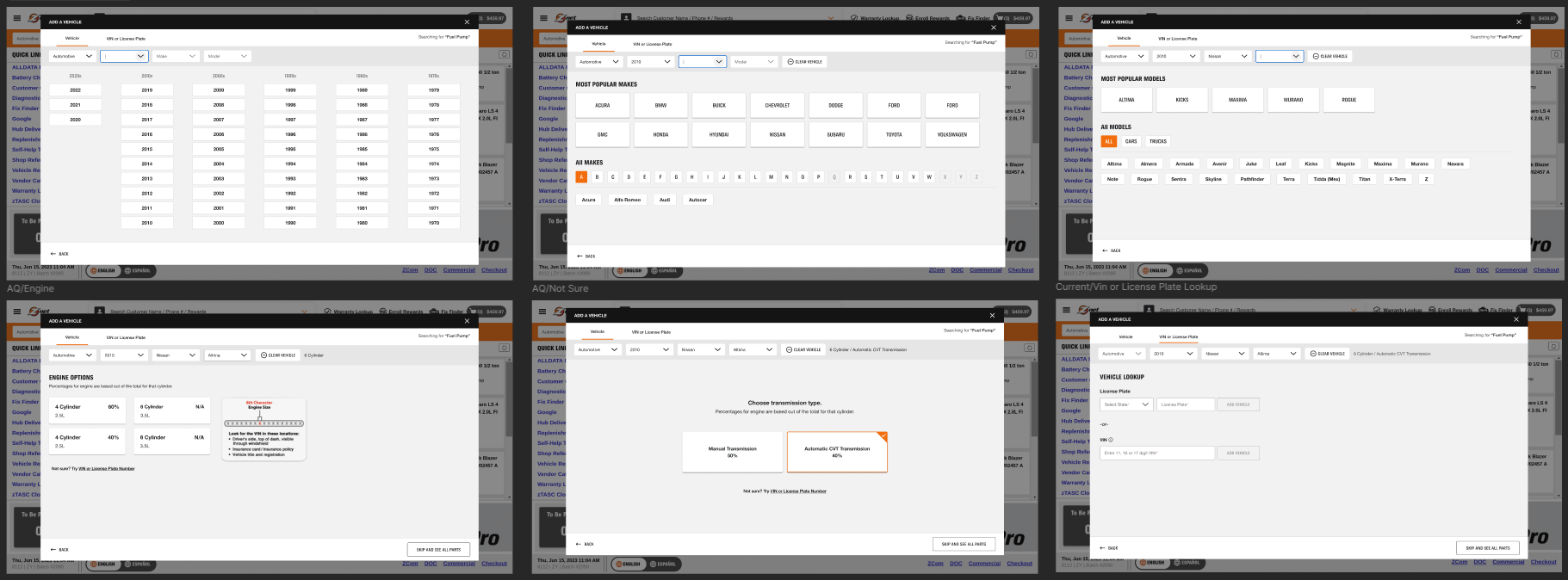
Lastly, we designed an interface for commercial customers who add multiple vehicles every day and rely on rapid keyboard navigation to move through inputs efficiently. To minimize change management, we preserved the familiar structure and interaction model of the existing experience, making only targeted adjustments to support the new fitment requirements. This approach allowed us to establish a foundation for future improvements while maintaining productivity during the transition. Customers especially appreciated not having to enter unnecessary vehicle information when quickly locating a product or preparing a quote for someone on the phone.
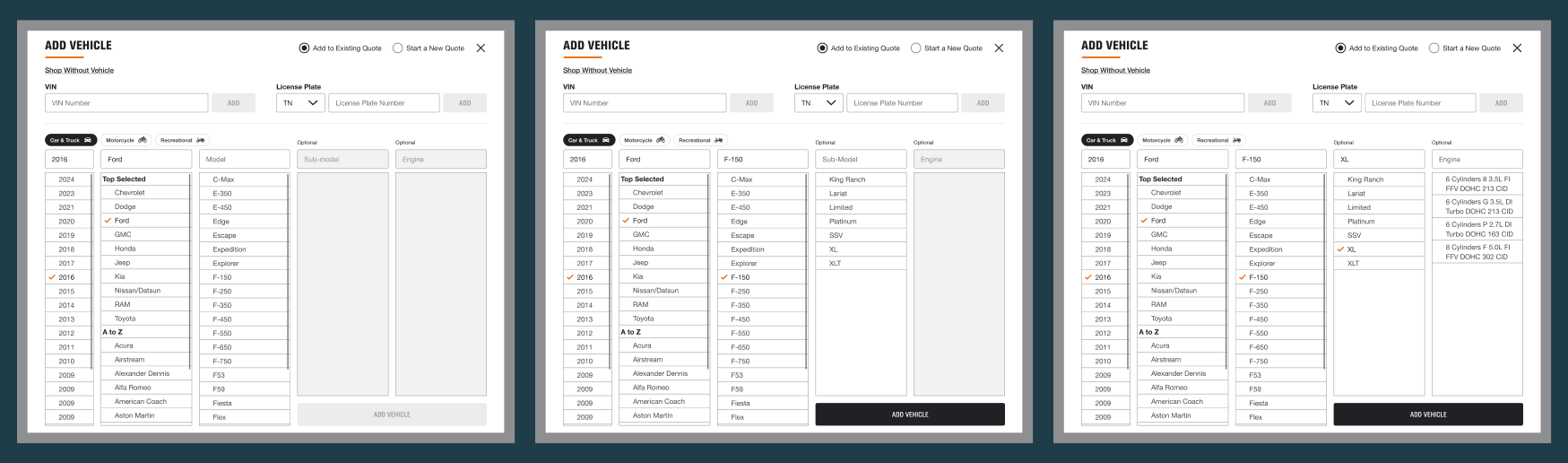
Overall, this work transformed the vehicle fitment experience into a more flexible, scalable, and user-centered system. By combining ACES data requirements with research-driven user flows, iterative testing, and tailored experiences for retail, mobile, in-store, and commercial customers, we reduced unnecessary input and made product discovery more intuitive. The redesign also expanded fitment coverage to include motorcycles and recreational vehicles, creating a stronger foundation for accurate results, greater customer confidence, and continued growth across platforms.